


Navigation
Contact us
Phone
Message
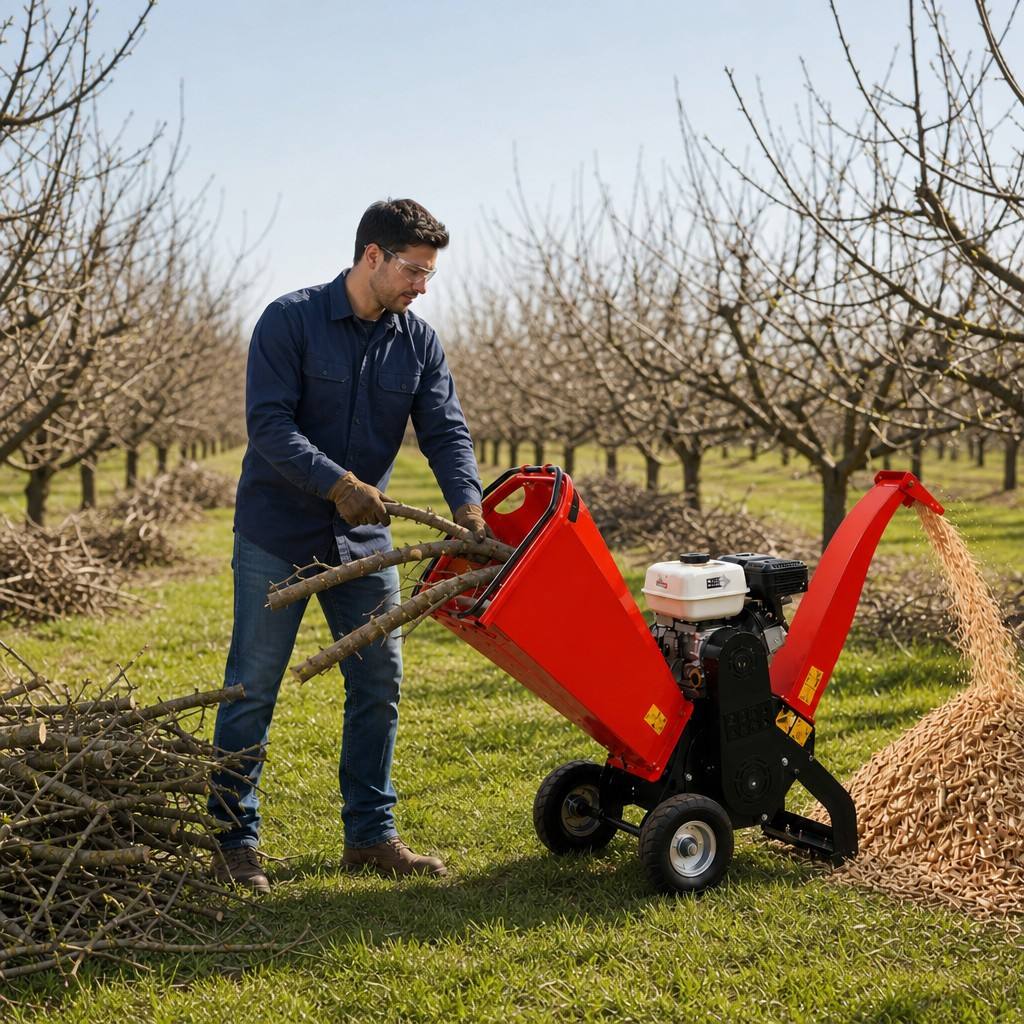
VOER 150A Wood Chipper: 6 cm Branch Capacity in a 90 kg Machine Built for One Operator
A compact petrol chipper rated to a 6 cm branch diameter and 0.8–1 t/h, built around a 150 mm double-edged blade set running at 2,800 r/min — sized for the pruning, orchard and green-waste work that arrives in batches rather than in truckloads.
Green waste becomes a cost the moment it has to be moved twice. A branch that cannot be reduced where it falls is handled once on the ground and again on a trailer, and on a maintenance round that difference is paid in labour rather than in tipping fees. The VOER 150A is specified around that decision point: a chipper at 90 kg net that a single operator can move, store and feed, carrying a cutting system — 150 mm blades, two of them double-edged — sized for the prunings, orchard rows and storm debris that a grounds or landscape team actually produces.
Four numbers decide the 150A
A compact chipper is chosen on four figures. On the 150A they are 6 cm, 0.8–1 t/h, 90 kg and 1,560 × 530 × 1,040 mm. Read one at a time they look modest. Read together they describe one specific machine: a unit moved by hand or on a small trailer, stored in a shed, fed by a single person, and worked through pruning material rather than whole trees.
• 6 cm of branch. The maximum crushing branch diameter covers hedge, orchard and landscape pruning, together with the storm-broken limbs that block a path until they are reduced. It is a specification for material that arrives in batches, not a rating for continuous whole-tree work.
• 0.8–1 tonne per hour. Throughput is the figure that turns a tidier site into a smaller disposal bill. Actual output follows the material: branch diameter, wood species, moisture content and how continuously the machine is fed all move the number.
• 90 kg net, 100 kg gross. The weight is what makes the machine a one-operator tool. It can be wheeled and loaded without lifting equipment, and it does not need a second person to reposition it between jobs.
• 1,560 × 530 × 1,040 mm. The footprint is narrower than a garden gate and shorter than a small bench, which is what allows the machine to work in back gardens and between orchard rows, and then be stored out of the weather in a shed or a van.
Power comes from a Rato gasoline engine rated at 7.5 hp with a 3.6 L fuel tank, driving a 150 mm blade set at a main shaft speed of 2,800 r/min. A diesel version is also built and is quoted at 120 kg gross — a heavier machine, and documented separately from the standard unit. The 150A carries CE marking.
The cutting system is where the running cost is decided
On any chipper the engine takes the attention and the blades decide the running cost. The 150A runs a 150 mm blade set: two double-edged blades plus one static blade, turning at 2,800 r/min. Double-edged blades can be rotated and reused before they are replaced, which is a real cost line for a machine worked every week rather than a few times a season.
The companion question is access. How the cutting housing opens for inspection and clearing matters more in daily work than it appears to on a specification sheet, because a machine that is slow to clear costs more in labour across a season than the difference between two purchase prices — and blade wear compounds that cost as the year goes on.
One rule applies to any chipper in this class: feed material inside the rated diameter. A 6 cm machine does not become an 8 cm machine because the piece fits the opening, and forcing oversized material is how a blade set, a belt and a working day are all lost at once.
Full specification
Where a compact chipper earns its place
The 150A is sized for the middle of the green-waste range, and its four figures map directly onto the jobs that sit there.
• Garden and landscape maintenance. A 6 cm capacity and 0.8–1 t/h reduce hedge and shrub prunings where they are cut, so material leaves as chip rather than as loose branches taking up volume on every trip.
• Orchard, hedge and vineyard pruning. The compact 1,560 × 530 × 1,040 mm body and 90 kg net weight let one operator work along rows and between trees, on ground a larger machine would never be moved onto.
• Storm and green-waste clean-up. A 3.6 L fuel tank supports extended runs, and the 6 cm rating covers broken limbs and debris that would otherwise be stacked, burned or carted away whole.
• Small tree work and site clearance. A 150 mm blade set at 2,800 r/min turns the cut material from a clearance job into a manageable chip pile in one pass rather than several.
• Rental fleets and equipment dealers. Manual start, CE marking and a low wear-part cost make the machine straightforward to place with an occasional user and to service between hires.
Who It Suits
Where the running cost actually sits
Purchase price is one line in the cost of ownership. On a chipper in this class the recurring lines are fuel, blades, belts and fasteners, service time, and the labour spent clearing blockages — and on a compact machine the last of those is usually the largest.
• Fuel. A 3.6 L tank on a 7.5 hp petrol engine is economical for intermittent work. The useful estimate is fuel per operating hour multiplied by real weekly hours, not a best-case week.
• Blades. A 150 mm double-edged set can be rotated and reused before it is replaced. Running two cutting edges instead of one before a new set is bought is a direct reduction in cost per tonne of material processed.
• Belts, fasteners and sharpening. Consumables on any chipper, and they belong in the annual budget from day one rather than after the first failure.
• Labour and downtime. Clearing, sharpening and moving the machine are recurring costs. A machine that is quick to clear and light enough to move by hand reduces them; a heavier one that is slow to service increases them.
On that arithmetic a compact machine often costs less to own per tonne than its purchase price suggests, because the saving sits in the hours it does not consume.
Freight, storage and the dealer view
At 90 kg net and 100 kg gross, packed in a 980 × 570 × 980 mm case, the 150A is a pallet-sized shipment. That matters commercially: the machine consolidates with other goods, needs no special lifting equipment at destination, and carries a predictable freight cost per unit. The diesel version, quoted at 120 kg gross, is heavier within the same class of package.
For a rental operator the relevant figures are manual start, a low wear-part cost and a machine an occasional user can be shown in minutes. For a dealer the relevant figures are package size and configuration: a compact case that ships economically, and two engine options — the standard Rato 7.5 hp petrol unit and the diesel build — to answer different market demand.
Safety Notes
• Read the operator’s manual before the first start, and follow it for every operating session.
• Wear eye protection when feeding material, and hearing protection when working close to the machine.
• Keep all guards and the hopper shield fitted whenever the engine is running.
• Stop the engine before clearing a blockage, inspecting the cutting chamber or reaching anywhere near the feed opening, and never clear material while the machine is running.
• Keep hands, loose clothing and tools clear of the feed opening at all times.
• Feed material within the rated 6 cm diameter at a steady rate, and never force oversized pieces into the machine.
• Keep bystanders, children and animals clear of the feed opening and the discharge area, and never stand in line with the discharge.
• Do not leave the machine running unattended, and shut the engine down before moving, refuelling or storing the unit.
Frequently Asked Questions
Q. What size branches can the VOER 150A handle?
The machine is rated for a maximum crushing branch diameter of 6 cm. Green wood, dry hardwood and dense knots behave differently in the cutting chamber, so feed material within the rated diameter at a steady rate rather than forcing oversized pieces.
Q. How much material can it process per hour?
Production capacity is 0.8–1 tonne per hour. Real output depends on branch diameter, wood type, moisture content and how continuously the machine is fed.
Q. What is the blade setup?
A 150 mm blade set: two double-edged blades plus one static blade, with a main shaft speed of 2,800 r/min.
Q. Why do double-edged blades matter?
They can be rotated and reused before they are replaced. For anyone operating the machine every week that is a recurring cost line rather than a detail.
Q. Is the 150A petrol or diesel?
The standard configuration is a Rato gasoline engine rated at 7.5 hp with manual start, at 90 kg net and 100 kg gross. A diesel version is also built and is quoted at 120 kg gross.
Q. How much does it weigh, and how does it ship?
Net weight is 90 kg and gross weight 100 kg for the standard configuration, packed in a 980 × 570 × 980 mm case. The package suits pallet handling and consolidated shipping.
Q. What is the fuel tank capacity?
3.6 L, which supports extended runs on pruning and clean-up work.
Q. Can one person operate and move the machine?
At 90 kg net, with a compact 1,560 × 530 × 1,040 mm body, the machine is designed for single-operator use in gardens, orchards and yards. Moving it on uneven ground still requires care, and it should be transported rather than towed over long distances.
Q. What certification does the VOER 150A carry?
The 150A carries CE marking.
Summary
The VOER 150A is a compact petrol wood chipper rated for a 6 cm maximum branch diameter and 0.8–1 t/h, with a 150 mm blade set — two double-edged blades and one static blade — running at 2,800 r/min from a Rato 7.5 hp gasoline engine with manual start and a 3.6 L fuel tank.
At 90 kg net and 1,560 × 530 × 1,040 mm, it is sized for one operator: it works where the material is, stores in a shed, and packs to 980 × 570 × 980 mm for pallet shipping. A diesel version is also built at 120 kg gross, and the model carries CE marking.
Judged on the four figures that decide this class of machine — capacity, throughput, weight and footprint — the 150A is built for pruning, orchard and green-waste work that arrives in batches, and for the cost of never handling that material twice.
VOER supplies the 150A wood chipper and other compact machinery for landscaping, grounds care and material handling, serving contractors, farms, orchards, rental businesses and equipment dealer partners.
This stunning beach house property is a true oasis, nestled in a serene coastal community with direct access to the beach.
Contact
West Street, Melbourne Victoria 3000 Australia