


Navigation
Contact us
Phone
Message
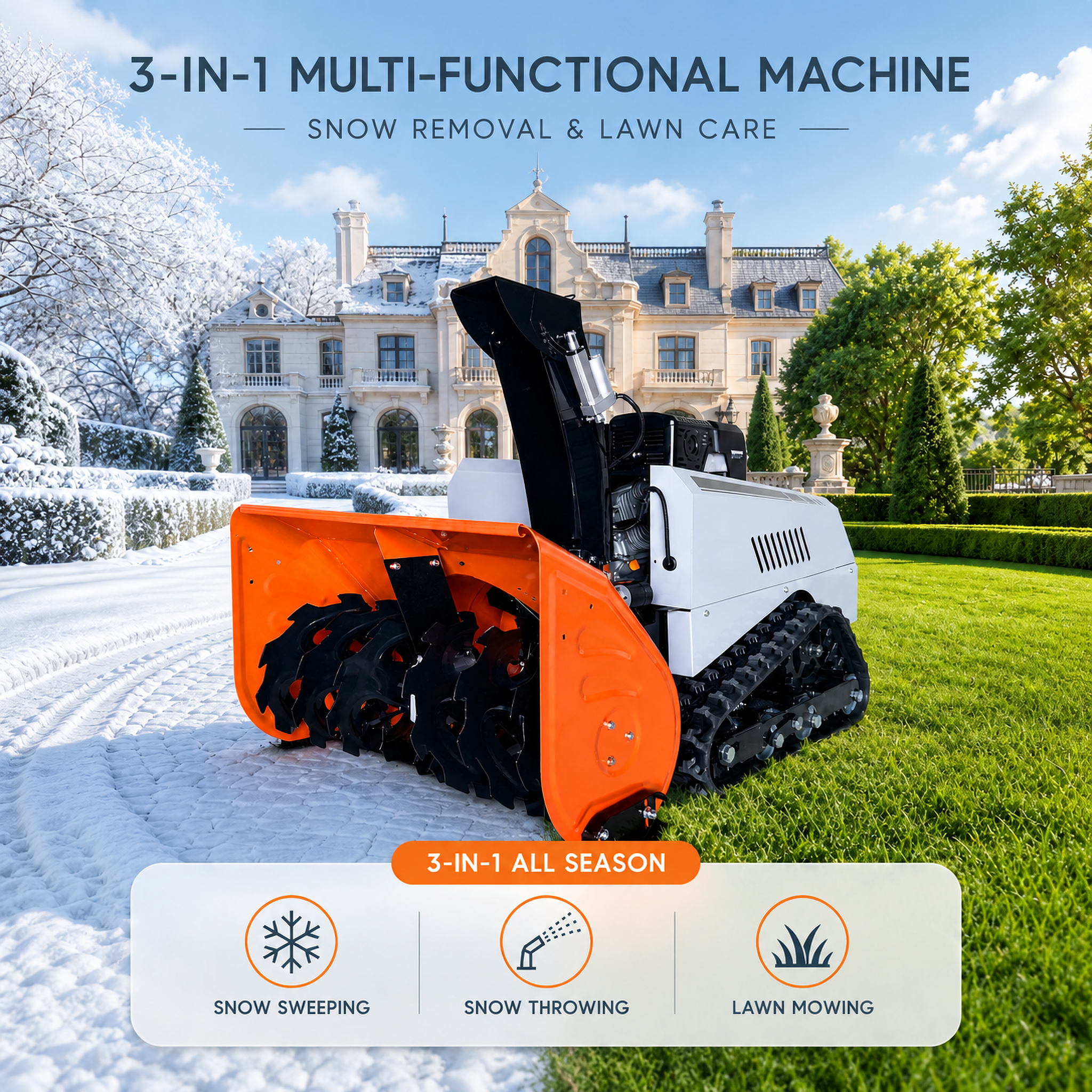
PRODUCT NEWS · VOER 1000T-PRO · ONE CHASSIS, TWO SEASONS
One tracked platform for winter snow clearing and summer mowing, with the working attachment mounted at the front.
VOER 1000T-Pro: A Remote-Controlled Tracked Machine for Snow Clearing and Summer Mowing
A 1,000 mm snow head for winter, an 800 mm mower head for summer, and the same tracked platform between them. The VOER 1000T-Pro gives contractors, estates, facilities teams, and grounds departments a practical way to keep one remote-controlled machine working across more than one season.
One Machine, Two Working Seasons
Snow clearing equipment often sits idle after the last snowfall, while grass, rough growth, verges, and orchard rows still need attention during the warmer months. The VOER 1000T-Pro is built around a different working pattern: use the same tracked chassis and power platform for winter clearance, then fit the front mower head when the mowing season begins.
The platform keeps its Loncin 420 engine, 120 mm rubber tracks, track-drive system, remote control, transmission, and remote-controlled lift in both configurations. Only the front working attachment and its drive belt change. That common platform reduces the amount of equipment that needs to be stored, trained on, maintained, and moved between sites.
• Winter configuration: a 1,000 mm snow head clears snow to a working depth of 2 to 60 cm, throws up to 15 m, and uses a 360° chute.
• Summer configuration: an 800 mm mower head cuts at adjustable heights from 20 to 120 mm with a straight-blade design.
• The same 15 HP Loncin 420 engine supplies the working attachment drive in both configurations.
• Two 500 W electric motors are used for tracked travel.
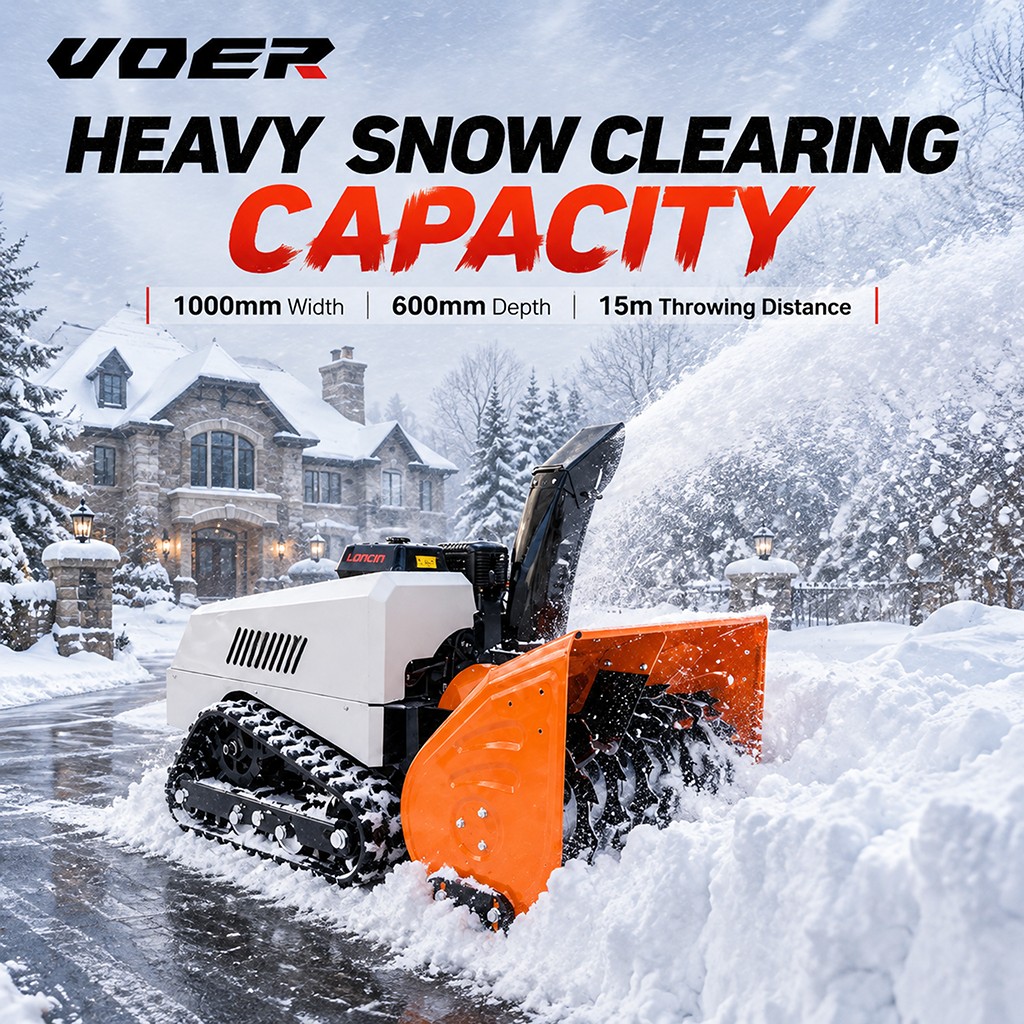
The snow configuration combines a 1,000 mm clearing width, adjustable chute direction, and tracked travel for winter access routes.
In winter configuration, the 1000T-Pro is intended for places where snow must be moved away from a usable route rather than simply pushed to its edge. The front snow head collects and throws snow through the chute, while the tracked platform carries the machine along driveways, parking areas, lanes, ramps, paths, and facility access routes.
Practical winter operating method
1. Inspect the route before starting. Remove visible stones, wire, branches, and other objects that may enter the snow head. Mark edges, drains, kerbs, steps, parked vehicles, and other fixed obstacles.
2. Position the machine on firm ground with enough clearance around the discharge direction. Start the engine using the available start method and allow the system to reach operating condition.
3. Set the chute direction from the handset before entering the main clearing line. Use the remote-controlled lift to position the front attachment for the route and surface.
4. Begin with a controlled travel speed and keep the machine in view. Use the 1,000 mm working width to create an organised clearing pattern rather than crossing back through the same snow unnecessarily.
5. Direct the discharge toward an area that will not block a later pass, a doorway, a sightline, or a drainage route. Change direction from the handset when the route changes.
6. Stop the engine before clearing a blockage or inspecting the auger, impeller, chute, guards, or belt system.
Summer Use: Mowing Grass, Verges, and Rough Growth
When the snow season ends, the same tracked platform can be used with the 800 mm mower head. This gives the machine a second role in estate maintenance, roadside verge work, grounds care, orchard rows, embankments, and other areas where a conventional ride-on mower is difficult to position or where the operator should not stand on the slope.
What the mower head adds
• 800 mm mowing width for a consistent cut across each pass.
• 20 to 120 mm adjustable cutting height for maintained grass, rough grass, and taller verge growth.
• Straight-blade cutting arrangement driven from the host engine by a belt.
• The same tracked travel system, remote control, and front lift used by the snow configuration.
The mower head is not a second powered vehicle. It is a front attachment that uses the 1000T-Pro platform already on site. That is useful for organisations whose work calendar changes with the weather: snow clearance in winter, mowing and vegetation management in summer.
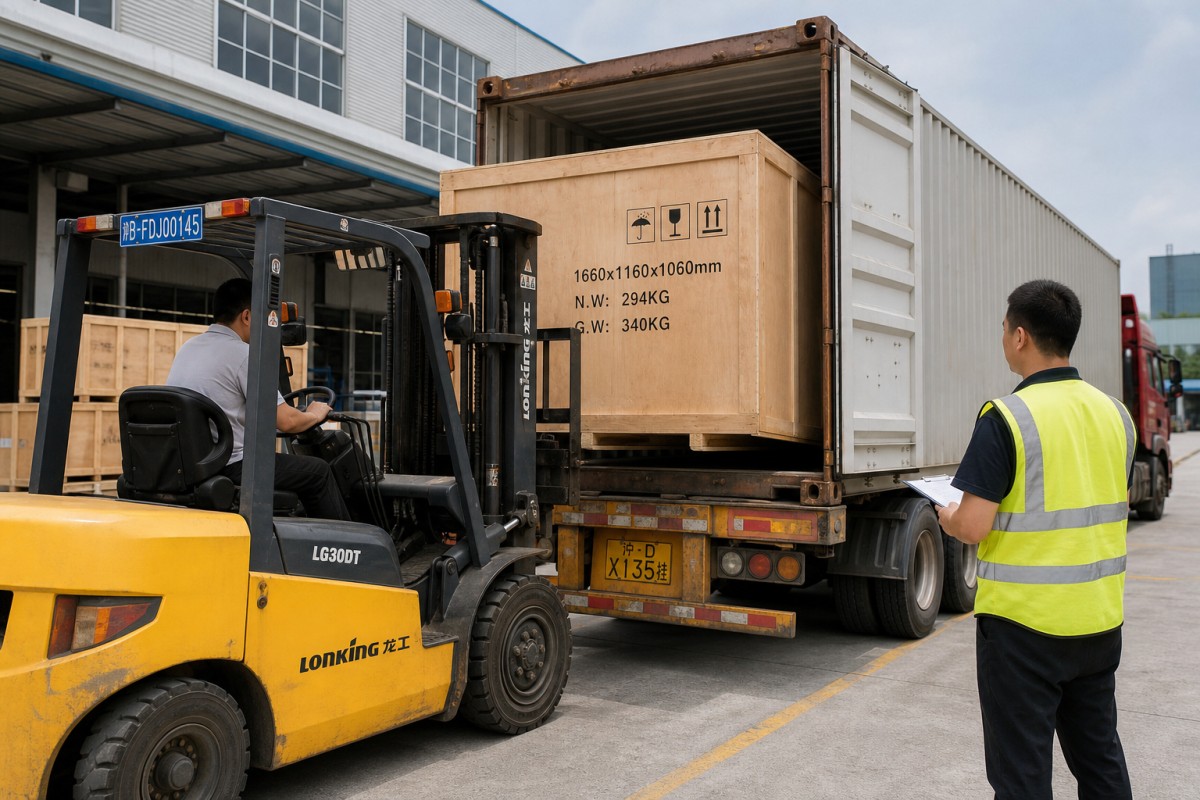
Typical winter work areas include private driveways, commercial parking areas, public paths, and farm access routes; the summer attachment extends the platform into grounds-care work.
Practical summer operating method
1. Walk the mowing area first. Remove stones, wire, branches, and other objects, and identify drainage covers, posts, kerbs, tree roots, water edges, and changes in slope.
2. Fit and secure the mower head at the front mounting point. Connect and tension the drive belt, check the electrical connection, and confirm that all guards are fitted before starting.
3. Select a cutting height within the 20 to 120 mm working range according to the grass condition and the desired finish. Start higher when the vegetation is tall or the ground is unfamiliar.
4. Establish a clear travel line and keep the machine in sight. Use steady passes, avoid sudden turns on a slope, and do not allow people or animals into the cutting area.
5. Inspect the cut after the first pass. Adjust the cutting height or travel pattern if the vegetation is dense, wet, lodged, or uneven rather than forcing the machine through an unsuitable pass.
6. Stop the engine before inspecting the deck, blades, belt, or discharge area. Remove accumulated material only after all moving parts have stopped.
Fast Front-Attachment Changeover
The 1000T-Pro keeps attachment work at the front of the machine. To switch between the snow head and the mower head, place the machine on level ground, stop the engine, secure the machine, and allow hot components to cool. Remove the current front attachment, fit the replacement to both sides of the mounting frame, connect the drive belt through the tensioner, and check the electrical connection and guards before restarting.
The engine, tracks, track motors, transmission, handset, and remote-controlled lift remain part of the same platform. The changeover involves the front attachment and its drive belt, with no specialist tooling required. Always use the operator documentation for the exact attachment sequence and fastener checks.
Where the Two-Season Platform Fits
Key Specifications
Safety Notes
• Read the operator documentation before using either attachment.
• Keep the machine in clear line of sight and keep people, animals, and vehicles outside the working area.
• Stop the engine before changing an attachment, clearing a blockage, checking the belt, or inspecting the blades, auger, and impeller.
• Wear eye and hearing protection, suitable gloves, and protective footwear.
• Keep guards and shields fitted whenever the engine is running.
• Do not use the machine on a slope or surface outside the published working envelope or the conditions assessed by the operator.
This stunning beach house property is a true oasis, nestled in a serene coastal community with direct access to the beach.
Contact
West Street, Melbourne Victoria 3000 Australia