


Navigation
Contact us
Phone
Message
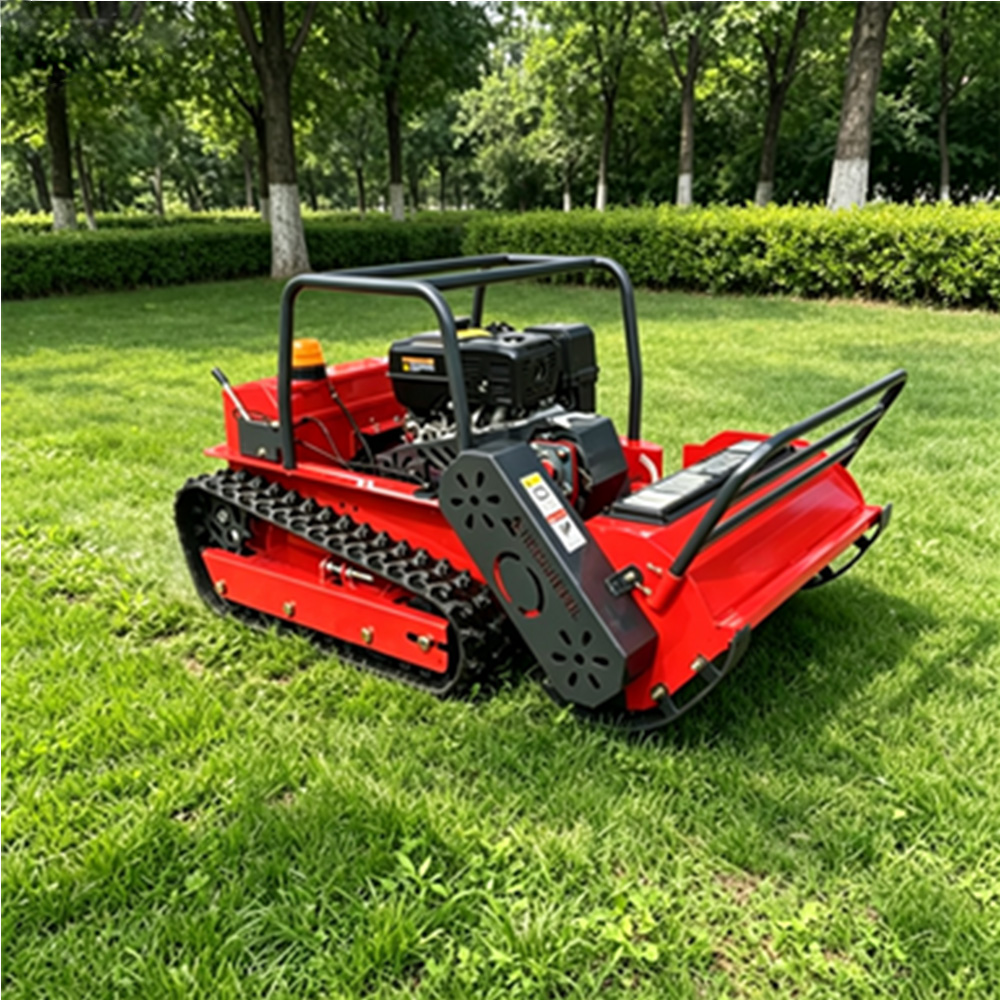
Buying a Remote-Controlled Crawler Mower - 5 Tips & Things to Know (VOER T100J)
Buying a remote-controlled crawler mower requires more than comparing engine size, cutting width and price. The right machine has to match the ground you actually cut, the grass you actually have, the slope angles you must work on, and the safety case for keeping an operator away from the cutting unit.
Buying a remote-controlled mower requires more than comparing horsepower, appearance and price. The right machine must match the job, the terrain, the grass conditions and the long-term service requirements. These five practical tips can help grounds managers, municipal crews, landscaping contractors, orchard operators and equipment dealers make a more informed purchase.
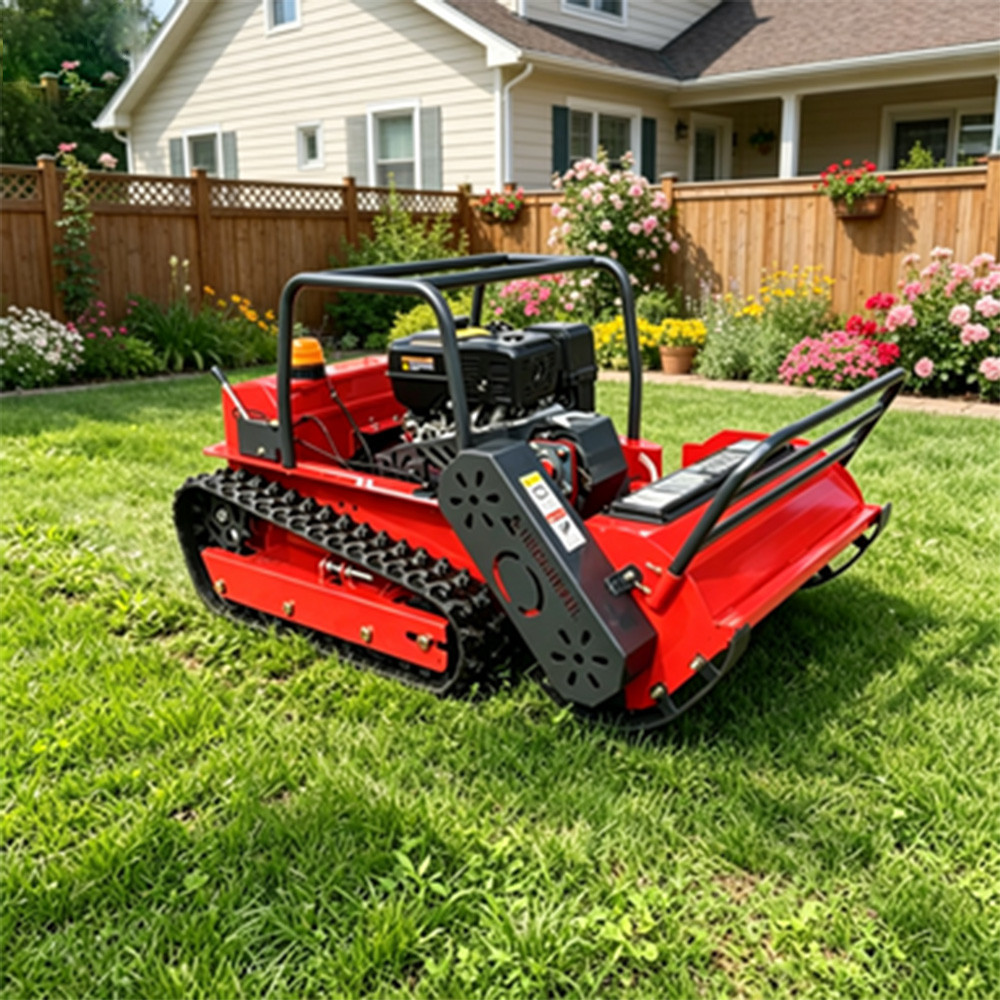
1. Define the Ground, the Grass and the Duty Cycle
Start with the conditions the machine will work in, not with the specification sheet. Record the surfaces you are responsible for, the grass height you normally cut, and how many hours the machine will run in a season.
The questions worth answering before you compare models are practical ones: Is the ground flat, or does it include banks, ditches and embankments? Is the grass fine turf that must be left even, or rough growth that only needs knocking back? How tall does the grass get between cuts? How wide is the narrowest gap the machine must pass through? And how many hours will it run in a single week?
A remote-controlled mower answers a specific problem. On sloping, soft or awkward ground, the risk in conventional mowing is not the cutting - it is the operator being on the slope at all, or being close to a rotating cutter in long grass where the ground cannot be clearly seen. Moving the operator off the machine changes that calculation, and it also changes which machines are worth comparing.
The VOER T100J is a remote-controlled crawler lawn mower built around a 1,000 mm cutting width and a cutting height range of 20 mm to 200 mm, powered by a 15 HP four-stroke petrol engine with a rotary cutter. That combination suits organisations that maintain open turf, banks, verges and rows - rather than a household lawn.
One point is worth thinking through early. A machine that is specified for the worst ground on your list will spend most of the season working well inside its limits. A machine specified for the easiest ground will meet its limits on the first bank you have to cut. Compare the duty cycle you actually run, not the one you hope for.
2. Understand Cutting Width and Cutting Height Before You Compare
Buying a mower becomes clearer when you stop reading a single headline number and compare the full set of cutting figures. Width decides how many passes a hectare takes. Height range decides which jobs the machine can take on at all.
The T100J cuts 1,000 mm wide and adjusts between 20 mm and 200 mm. Read those two figures together. A 1,000 mm deck is wide enough to make real progress on open turf, while staying narrow enough for the rows and gaps that a wide ride-on deck cannot enter. The 20 mm to 200 mm height range is what lets the same machine take a fine pass on maintained turf and still work through rough growth well above it.
The cutter is a rotary type, which is the right family for this class of work. A rotary cutter handles mixed and uneven growth without the fragility of a reel or cylinder unit on ground that contains stones, twigs and debris.
Read the table as a system rather than a scoreboard. Cutting width is not automatically better when it is larger - a wider deck needs more power to hold its speed in heavy growth, and it will not fit through the gaps a narrower machine will. Height range, weight, transport dimensions and the power available to the cutter all have to hold together for the machine to be productive.
Ask each supplier for the latest model-specific specification sheet and compare machines under the same definitions and units. Width, height and power figures are only comparable when they are measured the same way.
3. Check the Drive, the Hybrid Power and the Remote Control System
On a remote-controlled machine the drive system is the specification that decides whether the machine is productive or merely present. A machine that cannot hold its line on a wet bank, or that loses power partway through a shift, will spend the day doing half the job twice.
The T100J uses a crawler chassis rather than wheels. Tracks spread the machine's 346 kg over a larger contact area, which is what gives grip on soft, wet or uneven ground where a wheeled mower would spin or leave ruts. That is the same reason tracked plant is used on embankments and ditch banks.
Power is handled as an oil-electric hybrid. The 15 HP four-stroke petrol engine drives the machine and the cutter, and an on-board 1,260 W generator keeps the 24 V, 20 Ah battery charged while the machine is working. That matters for a remote-controlled machine for a practical reason: the drive and the control system need electrical power continuously, and a battery-only design stops when the battery is flat. A self-charging hybrid keeps working for the length of the shift instead of the length of the charge.
The third part of the same system is the remote itself. The T100J has a remote control range of 400 m, which is what allows the operator to stand clear of the cutting unit and still keep the machine working along a bank, a verge or a row. Treat the range figure as the working limit rather than a target: keep the machine in clear line of sight at all times, and reduce the working distance where trees, buildings or changes in level interrupt the signal.
Before you order, confirm the machine is specified for the surfaces and the grass you actually work on, and that the cutting attachment and the remote system suit them. A machine that is well matched on paper can still disappoint if its cutter or its tracks are chosen for the wrong ground.
4. Budget for Blades, Consumables and Seasonal Changeover
Mowing equipment is judged in the middle of a season, when one missing part stops the whole schedule. Before you order, list what must arrive with the machine and what you need to keep in stock:
• Blades and cutting parts. The blade set and the deck take the abrasion, not the frame. Ask for the consumable list and current prices with the quotation, and treat them as a running cost per working hour.
• Track wear. Crawler tracks are a wear item, and track life depends on how much time the machine spends on abrasive or hard surfaces. Ask how the tracks are tensioned, how they are replaced and what a replacement set costs.
• Remote and battery system. The remote, its battery and the on-board 24 V, 20 Ah battery are the parts that decide whether the machine can be worked at all. Ask about replacement intervals and availability.
• Filters, plugs and drive belts. Routine service items should be listed with prices before the order, so the annual running cost is known rather than discovered.
• Documentation. Operation manual, specification sheet, certification documents and warranty terms should all be supplied with the order.
5. Calculate Total Cost, Freight and Supplier Support
Purchase price is only one part of ownership. Freight, import charges, fuel, blade and track replacement, routine service, storage and the cost of a machine standing idle during peak season all belong in the same comparison.
Freight deserves attention on this class of machine. The net weight is 346 kg (763 lb) and the machine measures 1,560 x 1,170 x 820 mm (61.4 x 46.1 x 32.3 in.), and it is shipped in a wooden box. Check the packed dimensions and weight with your forwarder and confirm how many units fit in the container you intend to book before comparing quotations from different suppliers.
Alongside freight, estimate fuel from your seasonal hours and add the blade and track cost per working hour. The engine carries CE / EPA certification; documentation requirements differ between markets, so state your destination when you request a quotation.
VOER supplies the T100J remote-controlled crawler lawn mower and other compact machinery for grounds managers, municipal crews, landscaping contractors, orchard operators, rental businesses and equipment dealers. Buyers can request current specifications, configuration options, packaging data, order information and market-relevant documentation before purchasing.
Safety note: This is a remote-controlled machine with a rotating cutter - keep well clear of the cutting deck at all times. Never reach under the machine or place hands or feet near the blades or the tracks, whether the engine is running or not. Always operate within clear line of sight, keep bystanders, children and animals outside the working area, and cut uphill or across a slope according to the manual rather than down a slope you cannot control. Switch off the engine and remove the key before inspecting, clearing, adjusting or servicing the cutter, and wait until all movement has stopped. Keep all guards, shields, covers and safety decals in place, wear eye protection and slip-resistant footwear when working around the machine, and never leave it running unattended. Operate only according to the manual.
Who the VOER T100J Suits
FAQ
What is the VOER T100J?
A remote-controlled crawler lawn mower with a 1,000 mm cutting width, a cutting height range of 20 mm to 200 mm and a 15 HP four-stroke petrol engine. It is an oil-electric hybrid with a rotary cutter on a tracked chassis.
Is it ride-on or remote-controlled?
Remote-controlled. The operator works from a hand-held remote with a range of 400 m rather than sitting on the machine, which is what allows it to be used on slopes, banks and verges.
How wide does it cut, and how low can it go?
1,000 mm (39.37 in.) cutting width, with cutting height adjustable from 20 mm to 200 mm (0.79 in. to 7.87 in.).
What does oil-electric hybrid mean on this machine?
The 15 HP four-stroke petrol engine powers the machine and the cutter, and an on-board 1,260 W generator keeps the 24 V, 20 Ah battery charged while the machine is working, so the drive and control system do not stop when the battery is flat.
Why a crawler chassis instead of wheels?
Tracks spread the machine's 346 kg over a larger contact area, giving grip on soft, wet and uneven ground where a wheeled mower would lose traction or leave ruts.
How far away can the operator stand?
The remote control range is 400 m (1,312 ft.). Keep the machine in clear line of sight and shorten the working distance where trees, buildings or changes in level interrupt the signal.
What grass and terrain is it intended for?
Open turf, slopes, banks, embankments, verges, sports turf and orchard rows, and grass heights from roughly 20 mm to 200 mm. It is not a household lawn mower.
How much does it weigh, and how does it ship?
Net weight 346 kg (763 lb), machine dimensions 1,560 x 1,170 x 820 mm (61.4 x 46.1 x 32.3 in.), shipped in a wooden box.
What should I confirm before ordering?
The cutting attachment and the cutting height range in the quoted configuration, the blade and track consumable list with prices, the remote and battery specification, the spare-parts list and lead times, warranty terms, the documentation required for your destination market, and the packed dimensions and weight for the freight booking.
Summary
Buying a remote-controlled crawler mower becomes easier when the decision is based on job fit, cutting width and height range, the drive, hybrid power and remote control system, blade and track cost, and supplier support. The VOER T100J packages a 15 HP four-stroke petrol engine, an oil-electric hybrid drive with a 1,260 W self-charging generator and a 24 V, 20 Ah battery, a 1,000 mm cutting width with a 20 mm to 200 mm height range, and a 400 m remote control range into one machine on a tracked chassis.
Compare these factors carefully, and request a configuration that reflects your actual ground and grass conditions rather than choosing on price alone.
This stunning beach house property is a true oasis, nestled in a serene coastal community with direct access to the beach.
Contact
West Street, Melbourne Victoria 3000 Australia